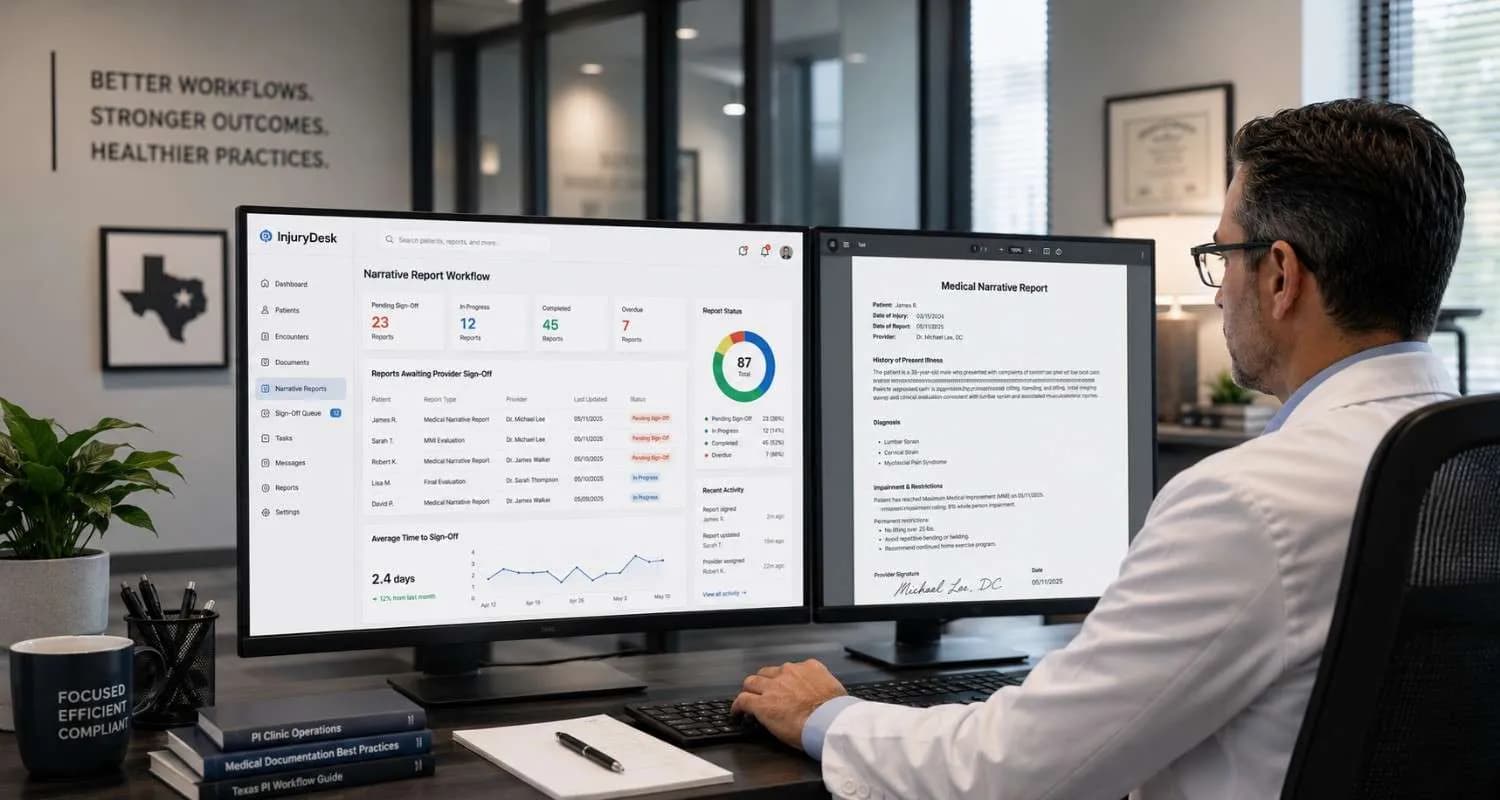

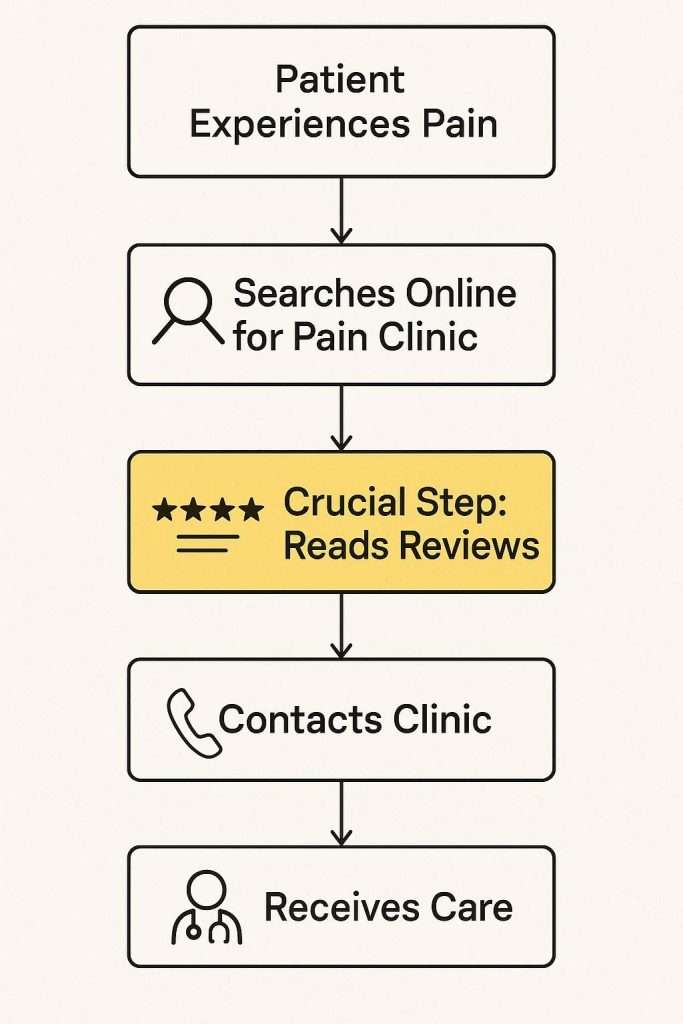
For pain management practices in Houston, online reviews aren’t just a marketing tactic—they’re the foundation of patient trust and acquisition. 78% of prospective pain management patients research online reviews before considering a clinic, especially when seeking sensitive or potentially invasive care. Recent research analyzing over 1,600 chronic pain practice reviews found that high-scoring providers had positive reviews consisting of 63.5% physician attributes, 23.4% administrative attributes, and 12.2% patient attributes.
In Houston’s highly competitive pain management landscape—from specialized clinics in the Texas Medical Center to thriving suburban practices—maintaining strong online presence through positive Patient Reviews Pain Management proves paramount. 84.7% of patients report satisfaction with pain management services when proper assessment and timely care are provided, while 72.2% overall satisfaction rates are achievable with optimized patient experience protocols.
The stakes remain high: 62% of patients consider positive online reviews extremely or very important when choosing providers, and 95% of U.S. adults trust online reviews as dependable. To understand how reviews integrate into broader digital strategies, explore our comprehensive local SEO for medical practices services.

Why Reviews Are Critical for Pain Management Practices
The decision to seek pain management care often involves significant anxiety and uncertainty. Reviews serve as powerful antidotes to these concerns, providing peer validation essential for building patient confidence.
Trust Building for Sensitive Care
Unlike general medical reviews, pain management reviews address deeply personal experiences with chronic conditions, invasive procedures like epidurals or nerve blocks, and overall journeys to find relief. Prospective patients scrutinize these reviews for reassurance about treatment effectiveness, staff empathy, and patient experience quality.
Research reveals that 62% of chronic pain patients explicitly rely on online reviews when considering switching providers, highlighting their role in shaping patient perceptions and directly impacting reputation management strategies. Pain management reviews frequently focus on three key areas:
- Physician attributes (63.5%): Knowledgeable, helpful, caring practitioners
- Administrative attributes (23.4%): Efficient scheduling, wait times, staff professionalism
- Patient care quality (12.2%): Pain relief outcomes, treatment effectiveness
For Houston practices, positive reviews addressing these elements become essential for attracting patients seeking specialized pain management services across the metropolitan area.
Ethical Review Generation Strategies
Generating authentic 5-star reviews requires ethical, thoughtful approaches integrated seamlessly into patient care workflows while maintaining HIPAA compliance and professional standards.
Timing & Tone for Houston Patients
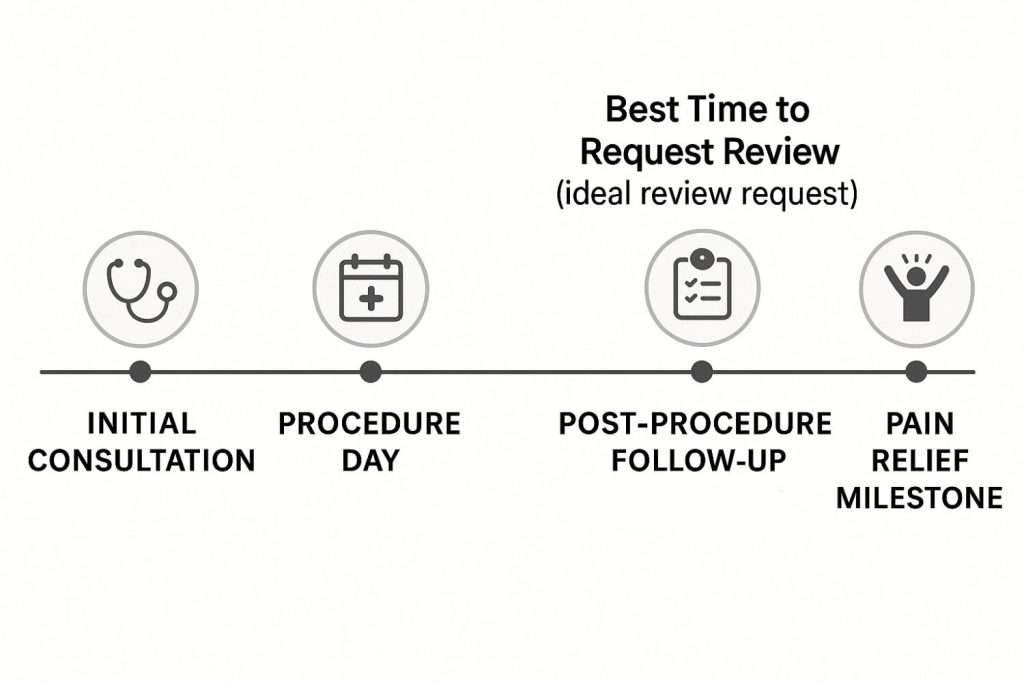
Optimal review request timing proves crucial for pain management practices. The ideal moment occurs when patients experience positive outcomes or significant relief—post-successful procedures like radiofrequency ablation or during follow-up visits where patients express satisfaction.
Research shows that 68.3% of patients report satisfaction when pain assessment and treatment are properly coordinated. Key timing strategies include:
- Post-procedure success: After treatments showing measurable pain reduction
- Follow-up appointments: When patients express gratitude or improved quality of life
- Milestone achievements: Reaching functional improvement goals
- Treatment completion: Successful completion of comprehensive care plans
Staff training on compassionate, appreciative request tones ensures authentic patient responses. Consider partnering with local Houston support groups for chronic pain conditions to organically encourage reviews from genuinely benefited patients wishing to help others.
Platform-Specific Tactics for Maximum Impact
Different review platforms serve varying purposes and hold different weights in patient decision-making processes. Optimizing for each platform ensures comprehensive online visibility.
Google Business Profile Dominance
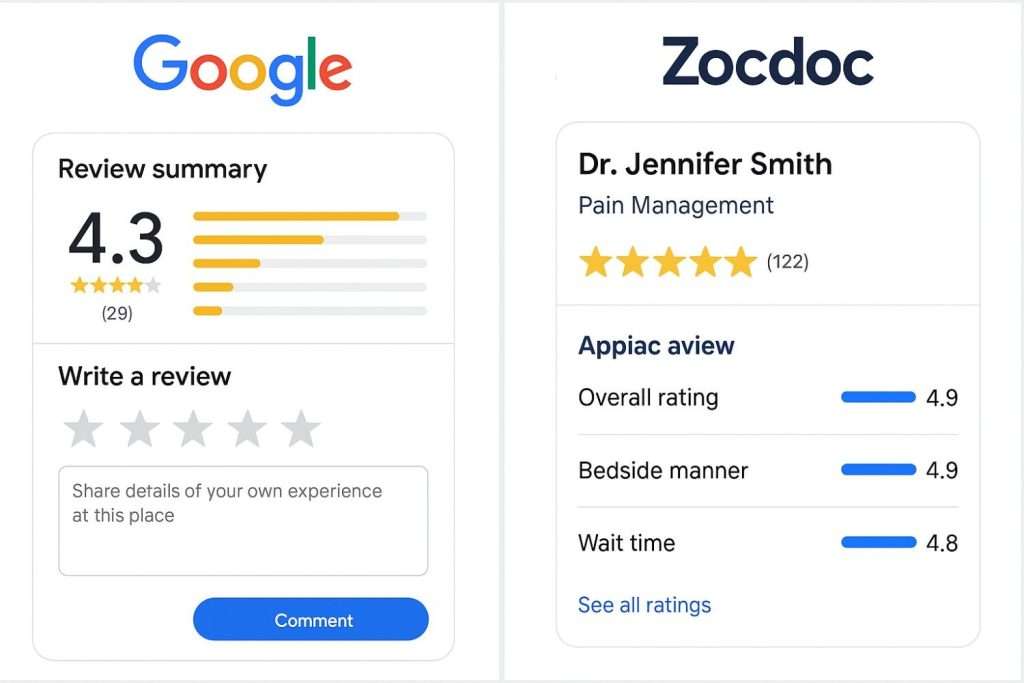
Google My Business represents the most critical platform for local search visibility. Houston pain management practices should meticulously optimize GMB profiles with neighborhood-specific keywords like “Memorial City Pain Management” or “Sugar Land Pain Relief Center.”
Encourage patients to leave reviews mentioning specific treatments received, such as “Dr. [Name]’s PRP therapy helped my knee pain immensely” or “Spinal cord stimulator procedure at [Clinic Name] changed my life.” This approach:
- Boosts visibility for relevant treatment-specific searches
- Provides valuable social proof for specialized services
- Improves local SEO rankings for Houston-area searches
- Demonstrates expertise in specific pain management procedures
For comprehensive GMB optimization guidance, explore our Houston local SEO services tailored specifically for medical practices.
Healthgrades & Zocdoc Specialization
While Google remains paramount, specialized healthcare platforms like Healthgrades and Zocdoc prove equally important for medical practices. 96% of pain physicians treat chronic pain, with 84% following patients longitudinally, making platform-specific optimization crucial.
Encourage patients to detail aspects that matter most to other patients: efficiency of wait times especially relevant given Houston’s traffic challenges, practitioner bedside manner, and how teams address anxiety associated with pain management procedures. These detailed reviews prove far more impactful than generic feedback on broader platforms.
Simplifying the Review Process
Making it effortless for patients to leave reviews proves essential for increasing 5-star feedback volume while maintaining compliance with healthcare regulations.
Mobile-Optimized Review Links
Given that most patients use mobile devices for online activities, provide direct, mobile-optimized review links through multiple touchpoints. Create QR codes on:
- Discharge paperwork with treatment summaries
- Appointment reminder cards and follow-up communications
- Waiting room displays with clear instructions
- HIPAA-compliant text message review requests
Use Houston-themed encouragements like “Help others in Katy find relief!” or “Share your experience to guide Houstonians seeking pain management.” This localized approach resonates with community-minded patients while building local search authority.

Managing Negative Feedback Professionally
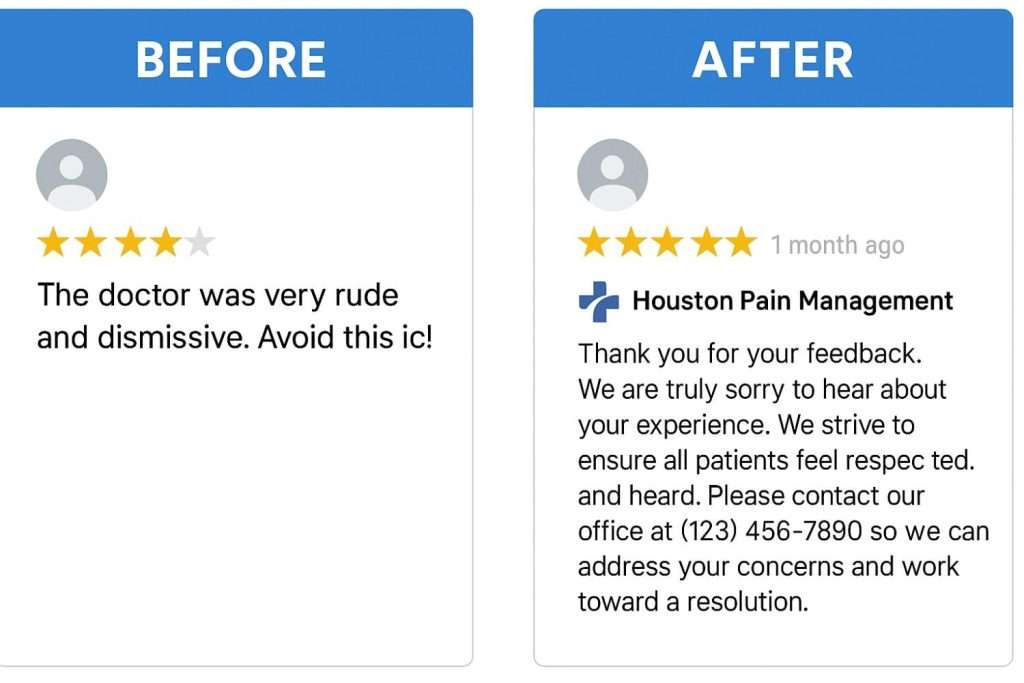
Even exceptional practices receive negative feedback. Professional response strategies prove crucial for maintaining positive Reputation Management Pain Practice outcomes.
Houston-Specific Response Templates
Develop professional, empathetic response templates addressing common complaints while considering Houston-specific issues. Address frustrations about:
- Parking challenges at Texas Medical Center locations
- Insurance processing delays common in complex pain management
- Weather-related appointment disruptions during hurricane season
- Traffic-related delays affecting appointment punctuality
Always offer clear resolution paths while maintaining strict HIPAA compliance by avoiding protected health information disclosure in public responses. This transparent, proactive approach often transforms negative experiences into positive perceptions of practice commitment to patient care.
For comprehensive guidance on managing online reviews and crisis response, explore our reputation management services designed specifically for healthcare practices.
Conclusion
For Houston pain management practices, actively cultivating 5-star Patient Reviews Pain Management represents fundamental drivers of growth and trust rather than optional marketing tactics. Houston pain clinics achieving 50+ five-star reviews experience three times more new patient inquiries, directly linking review volume to practice expansion and sustainable growth.
By implementing ethical review generation strategies, optimizing for key platforms, simplifying review processes, and professionally managing all feedback, practices build unassailable online reputations. Research confirms that 72.2% patient satisfaction rates are achievable through proper pain assessment and timely treatment provision, while 84.7% satisfaction becomes possible with optimized patient experience protocols.
Emphasize ethical consistency in all efforts—it’s the cornerstone of long-term reputation management success and sustainable practice growth in Houston’s competitive pain management marketplace.
Ready to boost your online reputation and attract more patients seeking relief? Explore comprehensive local SEO for medical practices services, or discover our specialized reputation management solutions designed specifically for Houston healthcare providers.

Next step
See how Synectus closes the handoff after the lead arrives.
If this article describes the exact gap inside your clinic, go one layer deeper into the service stack or book a direct strategy call with Synectus.