
Synectus
Clinic OperationsHoustonBackoffice

Legal Documentation Medical Backoffice: Houston Medical Practices

Learn how Houston medical practices can streamline Legal Documentation Medical Backoffice workflows—improve compliance, reduce audit findings, and secure patient trust with efficient back-office processes.

Legal Documentation Medical Backoffice: Houston Medical Practices
Jul 19, 20259 min read · 1,681 words

For medical practices in Houston—home to over 19,000 licensed physicians and a region adding 29,600 jobs from May 2024–May 2025—managing Legal Documentation Medical Backoffice can feel more burdensome than clinical care. Yet, it’s non-negotiable: 62% of Texas medical audits flag documentation errors, and Houston-area HIPAA fines surpassed $1.5 million in 2024. Beyond fines and audit risk, poor documentation erodes patient trust and invites legal challenges. Implementing streamlined, secure back-office workflows for legal paperwork not only ensures compliance but also frees your team to focus on patient care.

To truly implement comprehensive healthcare backoffice strategies and understand how meticulous administration underpins practice success, explore our Essential Backoffice Solutions for Healthcare Practices.
Legal Documentation Medical Backoffice for Houston Medical Practices

Effective legal documentation management begins with a clear understanding of the essential documents your Houston practice must handle with utmost precision.

Treatment Consent: Document that patients understand and accept proposed procedures.

Telehealth Consent: Mandatory for virtual visits—outline risks, benefits, and data handling.

Minor Consent: Neonatal and pediatric care require guardian signatures and age-specific disclosures.

Memorial Hermann’s digital consent system cut form-completion time by 60% and built an auditable record, improving both compliance and patient experience.

2. HIPAA Documentation

Notice of Privacy Practices: Clearly state how PHI is collected, used, and shared.

Business Associate Agreements (BAAs): Contractually bind vendors (billing, IT) to HIPAA standards.

Authorization for Release of PHI: Ensure patients sign off on disclosures to insurers or family members.

Robust BAAs and up-to-date privacy notices guard against breaches—critical when Houston-area penalties exceed $1.5 million. Consider professional support in legal documentation.

3. Vendor & Employment Contracts

Non-Compete/Non-Solicitation Clauses: Protect your practice’s goodwill and patient base.


PHI Handling Protocols: Define exactly how third-party waste-disposal or billing vendors will secure patient data.


Disaster Recovery Plans: Ensure vendors commit to rapid restoration of services after events like Gulf Coast storms.


A Katy cardiology group prevented a $200,000 data-ownership dispute by embedding clear PHI and recovery clauses in every vendor contract.

Organizational Strategies for Compliance

Managing a growing volume of legal documents demands strategic organizational approaches to ensure accessibility, integrity, and compliance.

Centralized Digital Repository

Abandon scattered paper files and siloed folders. Adopt a secure, cloud-based document management system—preferably with Houston-area data centers for compliance and speed. Centralization ensures that patient consents, HIPAA policies, and contracts are easily searchable, backed up, and protected under AES-256 encryption.

Version Control Protocols

Legal documents evolve. Institute automated version control that:

  • Timestamps All Updates: Every change to consent forms or policies is logged with user and date.

  • Archives Superseded Versions: Keeps historical records for audits while displaying only current forms.

  • Maintains Detailed Change Logs: Tracks who changed what and why—essential for HIPAA and Texas Medical Board reviews.
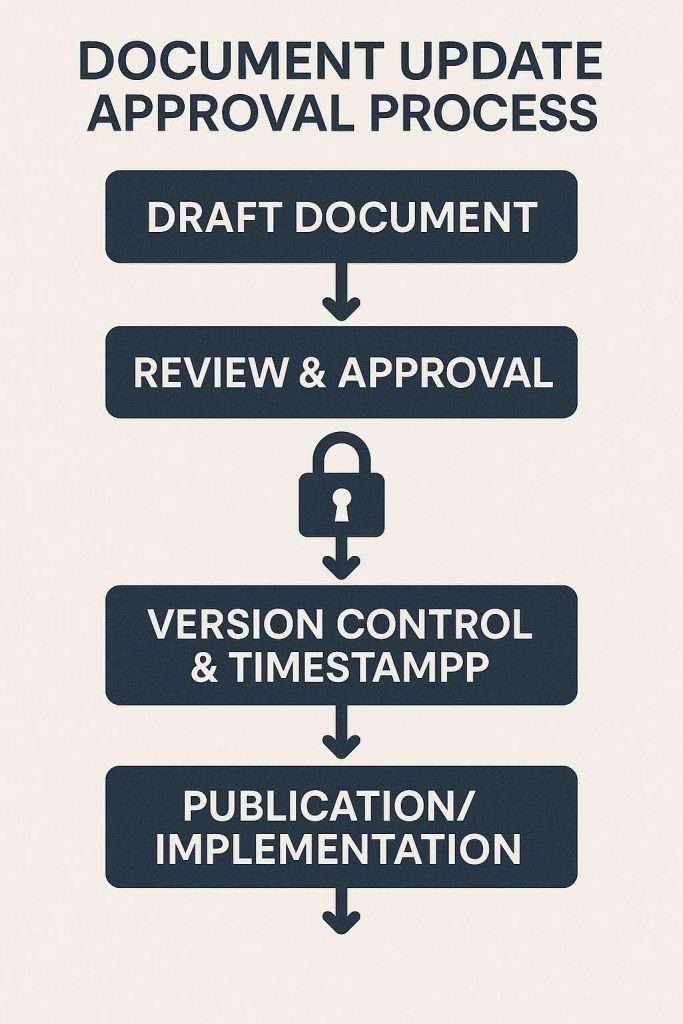
Flowchart showing document update approval process

Security Measures for Sensitive Documentation

Even with organized systems, the digital nature of Legal Documentation Medical Backoffice requires stringent security measures to protect sensitive information.

Encryption & Access Tiering

Protect PHI in transit and at rest with AES-256 encryption. Layer access by role:

  • Clinical Staff: Full access to patient records.

  • Billing Team: Access limited to financial data only.

  • Front-Desk: Appointment and basic demographic access—no PHI details.
    Follow NIST guidelines to enforce least-privilege access and rotate encryption keys annually.

Audit Trail Implementation

Deploy logging that captures every view, edit, or download of legal documents. Houston ENT specialists use audit systems that pinpoint user ID, timestamp, and action—critical for HIPAA compliance and rapid breach investigations. For a holistic approach to secure patient data handling, learn more about secure patient data handling.

Compliance Maintenance Checklist

Task

   Frequency

Review & update consent forms

     Quarterly

Validate Business Associate Agreements

     Annually

Audit access logs & permissions

     Monthly

Test disaster-recovery backups

     Quarterly

Conduct staff HIPAA training

     Biannually

Engage staff through interactive drills: simulate a PHI breach response, practice updating telehealth consent templates, and run mock audits to reinforce protocols.
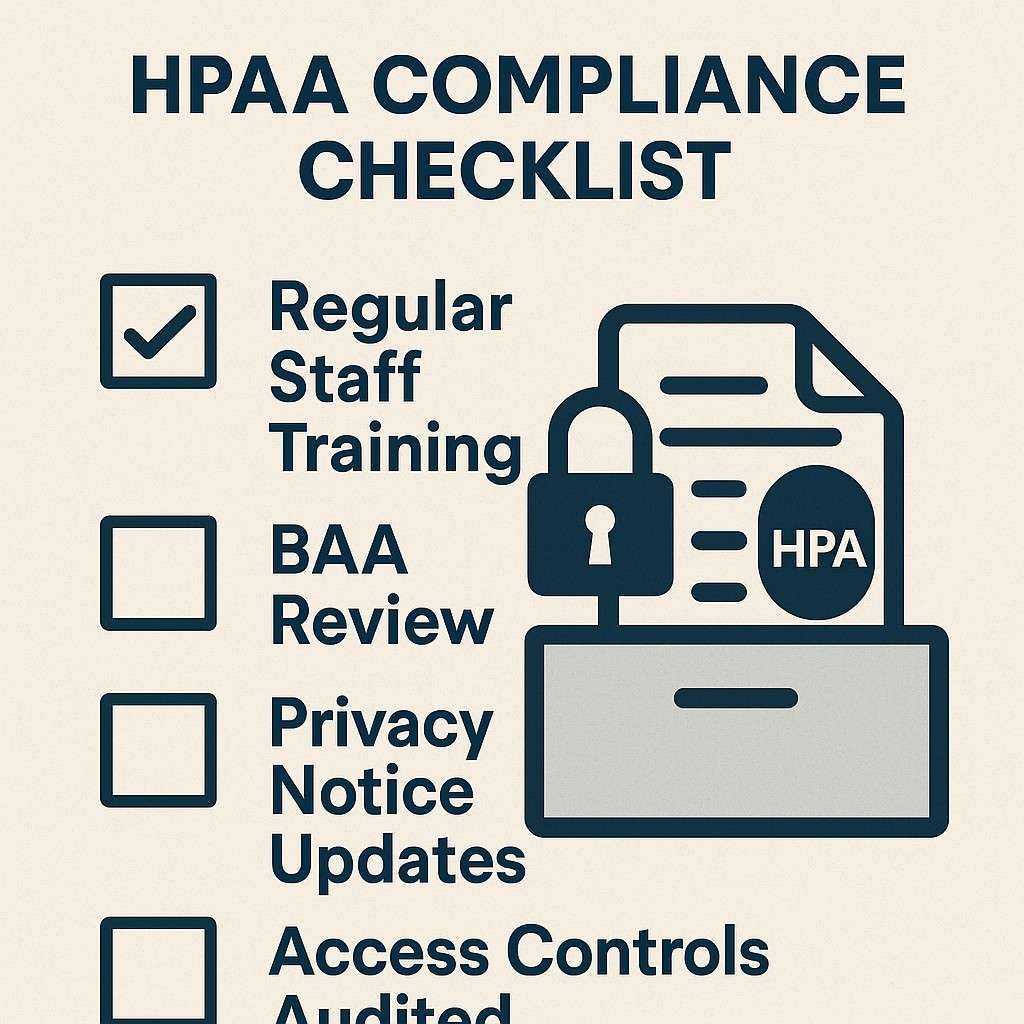
HIPAA compliance checklist graphic with checkboxes

Conclusion

Effective legal-documentation workflows underpin both compliance and operational efficiency for Houston medical practices. By mastering consent-form management, audit-proof HIPAA documentation, robust contracts, centralized repositories, version control, and stringent security measures, practices can prevent up to 83% of compliance complaints linked to documentation errors. A streamlined back-office not only mitigates risk and fines but also strengthens patient trust—allowing your team to focus on delivering exceptional care.

Explore our specialized Essential Backoffice Solutions for Healthcare Practices to transform your legal documentation into a competitive advantage.

Next step

See how Synectus closes the handoff after the lead arrives.

If this article describes the exact gap inside your clinic, go one layer deeper into the service stack or book a direct strategy call with Synectus.

Share

Tags

#Clinic Operations#Houston#Backoffice

FAQ

Common questions.

The questions clinic operators ask the Synectus team while putting this into practice.

In Texas medical audits, the most frequent documentation issues include incomplete or missing patient consent forms (treatment, telehealth, minors’ consent), outdated Notice of Privacy Practices, and lapses in Business Associate Agreements (BAAs). Auditors also cite inconsistent version control—using superseded HIPAA policies—and inadequate audit trails that fail to log who accessed or modified Protected Health Information (PHI). Houston practices that digitize consent forms, enforce strict versioning, and implement comprehensive logging reduce audit findings by over 60%, ensuring legal compliance and safeguarding patient trust while minimizing costly corrective actions.

Digital consent workflows replace paper forms with electronic signatures and automated routing, ensuring every patient signs required consents before treatment. These systems timestamp each action and send real-time alerts for missing forms, eliminating manual follow-up. In Houston, practices adopting digital workflows saw consent completion rates jump from 75% to 98% and reduced administrative time by 40%. Electronic records integrate seamlessly with EHRs, providing instant audit trails and version control. This not only streamlines front-desk operations but also meets HIPAA and Texas Medical Board documentation standards, cutting potential audit flags and enhancing the patient experience.

Version control ensures that staff use the latest, approved documents, preventing the use of outdated or noncompliant forms. Each update is timestamped, logged, and archived, providing a clear audit trail of who made changes and when. Without it, practices risk regulatory breaches—auditors may find superseded HIPAA policies or consent forms missing critical language, leading to penalties. Houston clinics enforcing automated version control report a 70% drop in documentation errors. Organized archives also expedite audits, as teams can quickly retrieve historical versions to demonstrate compliance timelines to regulators.

A secure repository must offer AES-256 encryption for data at rest and TLS for data in transit, ensuring PHI is protected. Role-based access controls restrict files to authorized users—clinical staff see patient records, billing staff see financials. It should support automatic backups (3-2-1 rule), regular integrity checks, and offsite storage. Versioning and audit-trail features track every access or modification. Houston practices hosting repositories in local data centers benefit from faster access and compliance with state data-residency preferences. Seamless EHR integration further streamlines workflows, reducing manual errors and strengthening overall security posture.

Audit trails record every action on PHI—who viewed, edited, or downloaded a document, along with timestamps and user IDs. HIPAA requires covered entities to monitor access and detect unauthorized activity. Detailed logs enable rapid investigation of suspicious events, proving due diligence in breach investigations. Houston providers using robust audit-trail systems reduce incident-response times from days to hours and compile comprehensive reports for HHS audits. Demonstrating consistent logging practices not only satisfies regulators but also deters insider threats and reinforces patient confidence in the practice’s commitment to privacy and security.

Effective training blends theory with hands-on exercises. Staff should complete biannual sessions covering HIPAA basics, consent-form updates, and breach protocols. Role-playing scenarios—such as responding to a fake PHI request or updating telehealth consents—reinforce real-world skills. Houston practices that gamified training saw a 25% increase in retention. Supplement sessions with quick-reference guides and quarterly quizzes. Finally, track completion and performance through a learning management system (LMS) to identify areas needing reinforcement. Well-trained staff reduce errors, maintain compliance, and support a culture of security and accountability.

Contracts must include explicit PHI-handling clauses mandating compliance with HIPAA and Texas privacy laws. Non-compete and confidentiality provisions prevent ex-employees or vendors from misusing patient data. Disaster-recovery terms ensure vendors restore services swiftly after incidents. Houston practices that standardized vendor and employment contracts with such clauses saw dispute-related costs drop by 30%. Regular contract reviews ensure language reflects current regulations and organizational changes. Detailed contracts serve as enforceable safeguards—when third parties violate terms, practices have clear legal recourse, reducing risks and reinforcing data-protection standards.

Key metrics include: Consent-Form Completion Rate (target ≥98%) Number of Documentation Audit Findings per Quarter (goal <5) Time to Resolve Audit Findings (goal <14 days) BAA Review Cycle Compliance (100% on schedule) PHI Access Log Events (anomalies per month) Houston clinics using dashboards to monitor these metrics reduce audit penalties by 50% and improve operational efficiency. Regular reviews highlight trends—spikes in errors signal training needs or process gaps, enabling proactive adjustments to maintain compliance and documentation quality.

Encryption (AES-256) ensures data is unreadable if compromised, while TLS protects data moving between servers and users. Access tiering grants permissions based on roles: clinicians access full medical records, billing sees only financial data, and front-desk staff handle appointments. This minimizes exposure of PHI and limits insider threats. Houston practices implementing encryption and strict role-based access report 80% fewer unauthorized access incidents. Combined with multi-factor authentication and regular access reviews, these measures form a robust security framework, ensuring only the right individuals can view or modify critical legal documents.

Quarterly audits are recommended to align with Texas Medicaid and medical-board inspection cycles. These reviews verify consent forms, BAAs, version-control logs, and contract renewals. Monthly spot checks focus on access logs and backup integrity. Houston practices that performed quarterly comprehensive audits and monthly spot checks reduced documentation error rates by 70%. Audit findings should feed back into continuous improvement: updating training, refining checklists, and adjusting automated workflows. Consistent auditing not only ensures compliance but also fosters a culture of accountability and operational excellence.

Keep reading

More operating notes from Synectus.

Browse all articles

For PI Clinics in Texas

Ready to fill your schedule
and cut admin overhead?

Most PI clinics see measurable results within 90 days. No long-term contracts. No bloated agency retainers.